

In this article
Van fleet GPS tracking tells you where each van is in real time, which route it took each day and how many kilometres it has done, and it alerts you when a vehicle enters or leaves an area. Chosen well, it also helps with what costs a small business the most: forgotten maintenance and expired paperwork. When choosing one, look less at how pretty the map is and more at the minimum contract term, the installation, the data fee and whether your drivers will have to learn something new.
- A fleet loses money through three holes: not knowing where vehicles are, costs that do not add up and admin that eats the day.
- Good fleet GPS tracking combines a live map, routes, geofences, alerts, mileage and cost per vehicle.
- Before signing, ask about minimum contract term, minimum fleet size, installation, data fees and driver apps.
- In Spain you must inform your staff before installing it.
- The sensible approach is to start with 2 or 3 vans and expand if it works.
The three holes in running a small fleet
If you have between 2 and 30 vans, you will probably recognise at least one of these problems.
1. Not knowing where they are
A customer calls because the technician has not turned up. You call the technician, who is driving and does not answer. Meanwhile another van is ten minutes from the address and nobody knows. Without a map, every "where is it?" question costs a phone call.
2. Costs that do not add up
At the end of the month, fuel, garage bills and fines come out of the company account, but nobody knows for sure which vehicle costs the most, or whether a garage charged for a service that was not due for another 5,000 km. Without real mileage per number plate, spending is one big, opaque figure.
3. Admin that eats the day
ITV, insurance, road tax, services, tyres. With five vans that is around twenty dates a year, or more, each on a different piece of paper. The day one slips through, the van is off the road or a fine arrives. The ITV (Inspección Técnica de Vehículos) is Spain's compulsory roadworthiness test, similar to the UK MOT. For a van up to 3,500 kg, for example, it becomes annual from 6 years old and every six months from 10 years old, according to Royal Decree 920/2017. Keeping track from memory with several vans of different ages does not work.
What does fleet GPS tracking cover?
These are the modules a complete solution should have. Not every provider includes them all.

| Module | What it solves for you |
|---|---|
| Live map | See where every vehicle is without phoning anyone. Send the job to whoever is closest. |
| Route history | Check a journey when a customer says nobody came, or review how the day was organised. |
| Geofences | Get an alert when a vehicle enters or leaves an area: the warehouse, a site, the base. |
| Alerts | A knock while the vehicle is parked, tracker disconnected, leaving an area. |
| Mileage and maintenance | Know how many kilometres each van has done and when its service is due. |
| Cost per vehicle | Maintenance and repairs linked to each number plate, so you know what each one costs you. |
The last module is the one most often forgotten and the one that saves the most money. A map tells you where the van is today. Cost per vehicle tells you whether it is worth keeping next year.
What should you ask a fleet GPS provider before signing?
Many fleet GPS contracts look like a mobile phone contract: small print, a minimum term and fees that appear later. Ask these questions and get the answers in writing.

- Is there a minimum contract term? If the service does not convince you after three months, can you leave without a penalty?
- Is there a minimum number of vehicles? Some providers require a minimum. If you have 3 vans, check this first.
- Who installs it, and how? In a van, a hardwired, hidden installation done by a professional is best, so it cannot easily be unplugged. Ask whether it has a backup battery.
- Is the data fee charged separately? The tracker needs a SIM. Find out whether it is included or whether you will pay an extra monthly connection fee.
- Do drivers need to install an app? Every new app is an excuse not to use it. The less they have to learn, the better.
- How do alerts reach you? An email read at eight in the evening is no use for a knock at eleven in the morning. A WhatsApp alert is seen straight away.
Also ask what happens to your data if you cancel, and whether the price is per vehicle or per bundle.
No minimum fleet size, pay per vehicle per month, with a 30-day free trial.
See the business planCommon mistakes when rolling out fleet GPS tracking
Buying for the map and forgetting the renewal dates
The map is what you see in the demo, and it is the first thing people stop looking at. After a few weeks, what really saves you trouble is someone telling you that van 3's ITV expires in a month, or that van 5 is already past its service mileage. If the system only puts dots on a map, it leaves half the problem uncovered. Remember that driving without valid insurance in Spain is punished with fines of €601 to €3,005 and the vehicle can be impounded.
Not informing staff
Installing GPS without telling staff is the most expensive mistake, because it can invalidate the data and start an employment dispute. Spanish law requires you to inform them beforehand, in writing and clearly. We explain it step by step, with a checklist and a sample clause, in is company vehicle GPS tracking legal in Spain?.
Trying to control everything from day one
If you switch on twenty types of alert, by day three you will ignore them all. Start with two or three that really matter to you (leaving the base out of hours, tracker disconnected, renewal dates) and add more once you have those under control.
Not logging maintenance
Knowing the mileage is useless if nobody records when the oil was changed. Without that record there is no cost per vehicle and no service reminder. If you want to understand service intervals, there is a guide to the car maintenance schedule by mileage.
How to start with 2 or 3 trial vans
You do not need to equip the whole fleet at once. A well run pilot tells you within a few weeks whether it is worth it.
- Pick 2 or 3 different vehicles: the one that does the most kilometres, the oldest, and the one that gives you the most headaches.
- Inform the drivers of those vehicles in writing before installing anything.
- Install the trackers and load the basic data: number plate, current mileage, ITV date, insurance and road tax.
- Set up two or three geofences: the base and the sites or customers you visit most.
- Use it for a month and note the decisions you made thanks to the GPS: a call you did not make, an alert that arrived in time, a service that was not missed.
- Decide with data: if the pilot saved you time or trouble, expand. If not, with no minimum term, you simply stop.
How Vehistrack fits a small fleet
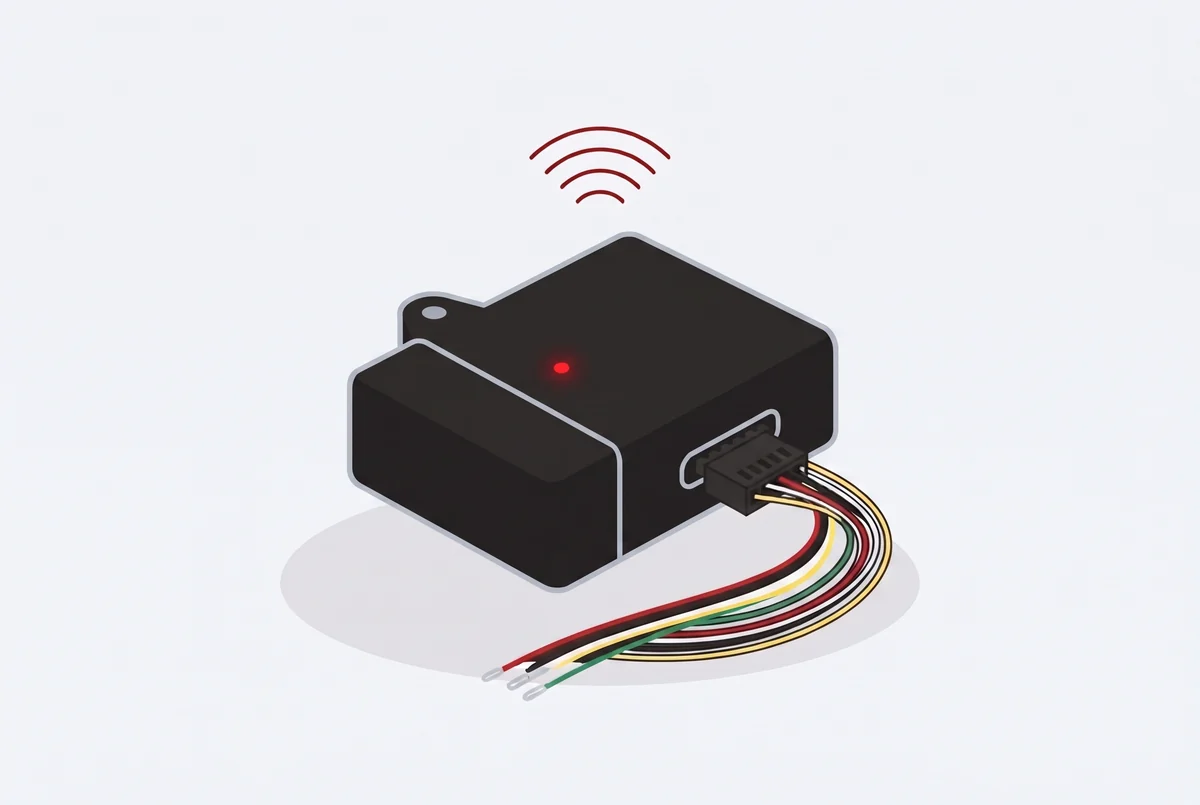
Vehistrack for business is designed for fleets of this size: the whole fleet on one map, route history (you can overlay two days to compare them), geofences with alerts, cost per vehicle with each number plate's maintenance, repairs and mileage, and renewal dates for the whole fleet with advance reminders. Each driver sees only their own vehicle and uses WhatsApp, so there is nothing new to learn. The van trackers are hardwired and hidden, with a backup battery, and come with a SIM with data included (500 MB or 5 years, whichever comes first), with no separate connection fee.
Frequently asked questions
How many vehicles do you need for fleet GPS tracking to pay off?
There is no magic number. With 2 or 3 vans you already notice the difference in phone calls and in renewal dates under control. What matters is that the provider does not impose a minimum.
Can a van's GPS tracker be unplugged?
That is why a hardwired, hidden installation is recommended for vans. A good system will also alert you if the tracker is disconnected.
Do I need the drivers' permission?
You do not need their consent for use during working hours, but in Spain you must inform them beforehand, in writing and clearly. Outside working hours, tracking is excessive unless they give express consent.
Can GPS tracking help control fuel costs?
Indirectly: with the real mileage of each vehicle you can compare what was refuelled with the distance driven and spot consumption that does not add up.
What happens if a van changes driver?
What matters is that the history (maintenance, repairs, mileage) stays linked to the number plate, not the person. That way nothing is lost when the driver changes. And do not forget to inform the new driver.


