

In this article
- What is a car GPS tracker really for?
- What types of car GPS tracker are there?
- How much does a car GPS tracker really cost?
- What to ask before buying a car tracker
- Is it legal to put a GPS tracker on a car in Spain?
- Does an OBD tracker protect against theft?
- A tracker that also looks after the car
- What if you have a motorbike or a van?
- Frequently asked questions
A GPS tracker for your car in Spain is worth it if you want to know where the car is at all times, find out if someone moves it or hits it while parked and, as a bonus, keep the mileage up to date without writing it down. There are four main types (plug in OBD, hidden and hardwired, battery powered and AirTag style tags), and each one solves a different problem. Before you buy, check above all what it really costs each month and whether the SIM and data are included.
- A car tracker does much more than fight theft: parking, family use, knocks while parked and maintenance.
- An OBD tracker takes a minute to fit; a hidden hardwired one is the hardest for a thief to find.
- The real cost is the device plus a subscription or data: ask whether the SIM is included.
- Tracking your own car is legal; tracking someone else's car is not.
What is a car GPS tracker really for?
Theft is the first thing that comes to mind, and with good reason: according to the Crime Report of the Spanish Ministry of the Interior (Balance de Criminalidad), Spain recorded 33,032 vehicle thefts in 2025, around 90 a day. But day to day, a tracker solves smaller and much more frequent problems:
- Knowing where you parked. In a town you do not know, in a huge car park, or when someone else in the family left the car.
- Who is using the car at home. If three people share it, you can see where it is and where it has been without having to ask.
- Knock alert while parked. You find out at the time, not three days later when you notice the bumper.
- Area alert. It tells you if the car leaves an area you define (your street, the garage, your village).
- Mileage that logs itself. Trackers that read the car's odometer tell you when the oil change or the service is due without you having to remember.
That last point sounds minor, and it is not. Most of the expensive things people forget on a car (an oil change that runs over, a timing belt that was not changed in time) come from not knowing how many kilometres you have done since last time. We explain it in detail in our car maintenance schedule by mileage.
What types of car GPS tracker are there?

| Type | Installation | Pros | Limits |
|---|---|---|---|
| OBD plug in | You do it, in a minute | No wires or workshop; can read mileage, battery and faults | It sits in a well known spot; an experienced thief will find it |
| Hidden and hardwired | A professional | Hard to find; permanent power; usually has a backup battery | Costs more to install and is not easy to move to another car |
| Battery powered | You hide it wherever you like | No wires; moves from one vehicle to another | Needs recharging; to save battery it reports infrequently |
| AirTag and similar | You leave it in the car | Cheap, no subscription | No GPS or SIM of its own; relies on nearby phones and alerts whoever carries it |
OBD plug in tracker
The OBD port is a connector that almost every car has under the steering wheel (under European rules, petrol cars from 2001 and diesels from 2004). The tracker plugs in there, takes power from the car and needs no workshop. As well as the position, some read data from the car itself: real mileage, battery voltage and fault codes. How much data you get depends on the make, model and year.
Hidden and hardwired tracker
A professional fits it behind a panel, connected to the car's electrics. It is the most serious anti theft option because nobody knows where it is, and it usually has a backup battery that keeps sending the position if the power is cut. It is the standard for vans and fleets, as we explain in our article on van fleet GPS tracking.
Battery powered tracker
It hides in any gap, with no wires. It is convenient, but to make the battery last for weeks it usually sends its position only every so often, and the day the battery runs out it stops working. You have to remember to charge it.
AirTag and similar tags
Strictly speaking, these are not GPS trackers. They have no SIM: their position is relayed by phones passing nearby. On a busy street they work reasonably well; on open ground, they do not. And because they are designed to find objects, not to watch over them, they warn people carrying a phone that an unknown tag is travelling with them. That protects against stalking, but it can also give the tag away to whoever drives off with your car.
How much does a car GPS tracker really cost?
The price of the device is only one part. The real cost is made up of:
- The device. A one off payment.
- Connectivity. A GPS tracker needs to send its position, and for that it uses a SIM with data. Some include it; others make you put in your own card and pay a separate mobile tariff.
- The service subscription. To see the live map, your trips or get alerts, many ask for a subscription.
- Installation, if it is hardwired.
Always do the maths over several years, not per month. A cheap device with a SIM you pay for yourself and a high subscription can end up costing far more than one with data included.
Ask word for word: "Are the SIM and data included? For how long? What stops working if I do not pay the subscription?". The third answer tells you a lot about how the product is designed.
What to ask before buying a car tracker
- Does it come with a SIM and data? How much, and until when?
- Is there a minimum contract? Can you cancel whenever you want?
- What works without a subscription? Some turn into a paperweight if you stop paying.
- What alerts does it send, and how? Yet another app you never open is of little use; a WhatsApp alert is something you see.
- Does it alert you if it is disconnected? On an OBD tracker this is essential.
- Does it read data from the car? Mileage, battery and faults turn a tracker into something useful every day, not just on the day of a theft.
- Is it compatible with your car? For OBD trackers, it depends on the year and the fuel.
- Warranty and returns? How many years of warranty and how many days to return it.
Is it legal to put a GPS tracker on a car in Spain?
On your own car, yes. It is your vehicle and you are entitled to know where it is. If other people at home share it, the sensible thing is to tell them it has a tracker.
On someone else's car, no. Following your partner, your ex, a relative or a neighbour without their permission is an intrusion into their privacy and can turn into a serious legal problem, including a criminal one. A tracker is for looking after your vehicle, not for spying on anyone.
The middle case is a company car driven by an employee: it is allowed, but with conditions (tell them beforehand, limit it to working hours, do not use it for anything else). We explain it step by step in our guide to company vehicle GPS tracking law in Spain, based on the Spanish data protection authority's (AEPD) guide on employment relationships.
Does an OBD tracker protect against theft?
Let us be honest: the OBD port is somewhere everybody knows about. An experienced thief knows to look there and can unplug it in seconds. That does not make it useless, but it changes how you should use it:
- The disconnection alert is the key. If someone unplugs it, you get an alert straight away and you know where the car was at that moment. And if whoever takes it does not know where to look, the tracker keeps sending the position for the whole journey.
- For high theft risk, go hidden. If your car is one of the most stolen models or sleeps on the street in a difficult area, combine the OBD tracker with a hidden hardwired one, or go straight for a hidden installation.
If your car is stolen, do not go and look for it yourself, even if you can see where it is. Report it and pass the location on to the police.
A tracker that also looks after the car
This is the part people rarely mention. An OBD tracker with diagnostics does more than say where the car is: it reads the real mileage, keeps an eye on battery voltage and picks up fault codes when a warning light comes on. That is what makes you use it every day, not only on the day something happens.
The Vehistrack car tracker works like this. It plugs into the OBD port in a minute, comes with a SIM with 500 MB or 5 years of data (whichever comes first) with no separate connection fee, and explains faults in plain language. With the Copilot plan (€4.99 a month per vehicle, no contract) you get the live map, the route of every trip and WhatsApp alerts for knocks while parked, for areas and for unplugging. Without Copilot it still keeps the last location, the diagnostics, the mileage and the maintenance reminders.
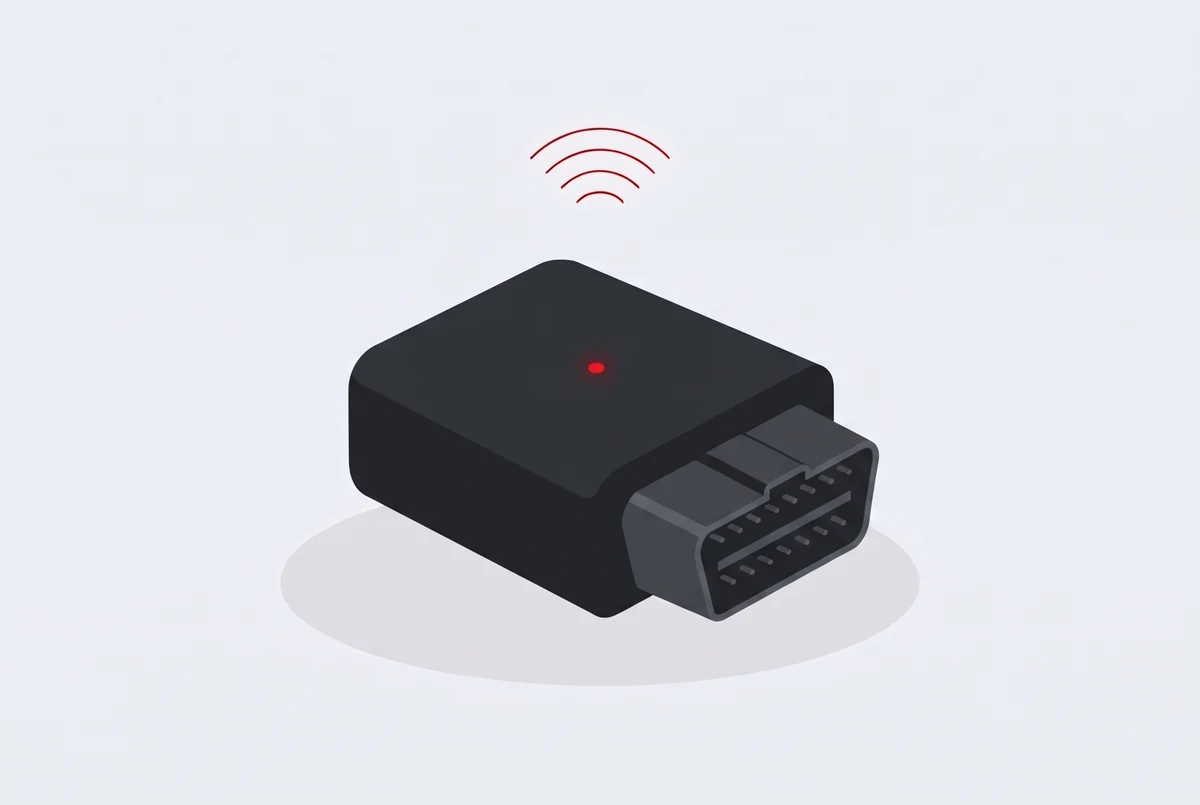
Location, mileage, battery and faults in plain language, with WhatsApp alerts.
See the trackerWhat if you have a motorbike or a van?
The needs change. On a motorbike the tracker is wired to the battery, has to withstand water and dust, and what really helps is a fall alert; we cover it in our article on the motorcycle GPS tracker. For work vans, a hidden installation with a backup battery and seeing the whole fleet on one map are what matter.
Frequently asked questions
Does a GPS tracker drain the car battery?
Trackers connected to the car take power from its battery, but they are designed to use very little with the engine off. If the car is going to stand for many weeks, keep an eye on the battery voltage.
Can I fit a GPS tracker to my car myself?
Yes, if it is an OBD plug in or battery powered model. Hidden hardwired trackers are best fitted by a professional so the car's electrics are not touched.
Can I use an AirTag as a car tracker?
It can help you find the car in a car park. As an anti theft tracker it is limited: it has no GPS or SIM of its own and it may warn whoever takes the car that a tag is travelling with them.
Does the tracker work in underground car parks?
Underground, GPS signal and mobile coverage are easily lost. Normally the tracker keeps the last good position and reports again once the car is back outside.
Do I need to pay a monthly subscription?
It depends on the model. Some only work with a subscription; others include the data and keep basic features working at no extra cost. Ask before you buy.


